Showing posts with label History. Show all posts

Saturday, 30 April 2016

STOP THIS MADNESS! ; Fulani herdsmen, Bishop. Very Rev. Prof. Igwebuike Onah


(A Press Statement following the Massacre of Innocent Citizens in Nimbo, by Suspected Fulani Herdsmen)
«A voice is heard in Ramah, lamenting and weeping bitterly: it is Rachel weeping for her children, refusing to be comforted for her children, because they are no more» (Jer 31: 15).
 

This passage from the Prophet Jeremiah captures the present mood in Nsukka and, especially, in the hitherto quiet and peaceful farming community of Nimbo in Uzo-Uwani Local Government Area. When the news broke about the massacre of innocent, unarmed and defenseless citizens of Nimbo in the early hours of Monday 25 April by invading armed militants, suspected to be Fulani herdsmen, the first question that popped into my mind was: "Again?" This was because similar stories had been heard from many parts of the country in recent times, including Abbi, another community in our Diocese, also in Uzo-Uwani Local Government Area. The news of the attack was soon followed by a flood of human beings fleeing their homes and emptying into the urban centre of Nsukka, many of them scantily clad women clutching only their babies. Wailing filled the air as vans brought in lifeless bodies of persons who were slaughtered like animals for the crime of having been found in their homes or on the way to their farms. Such scenes sent the minds of the older ones back to similar scenes in 1966, when our people had to flee the places they had considered their homes in other parts of the country, as a result of the first ethnic cleansing in modem African history. The big difference now, 50 years after, is that we are being chased out of our homes in our own land, from our own farms, from our Churches, from our schools and from our village markets. As our people say, if a man is pursued from outside, he runs into his house; but when he is pursued from his house, he has no place to run to.
 

The most painful aspect of the Nimbo massacre is that it was announced, expected and executed without inhibition - in broad daylight! The State Government is reported to have made attempts to provide security in the area prior to the incident. But what those who lost their dear ones (especially those little babies now blankly staring into an uncertain future, because their fathers have been senselessly murdered) and all of us want to know is why, as the reports go, the security forces "tactically" withdrew shortly before the attack and why, when they later returned to the scene, there was no attempt to immediately pursue and arrest the perpetrators. 

At present, nobody can say with certainty the number of those killed, given that more of those who were badly wounded are still dying and some bodies are still being recovered from the bush where the people had been killed while taking refuge. Today, Ni.nbo is like a ghost town. It is equally disturbing that whereas the invading militants killed and maimed anybody they could find, the only houses they attacked were Christian religious houses. They burnt the house of one Pastor and from there headed straight to the residence of the Catholic Priest, where they attempted to bum the house but could not, since they did not find any petrol in the car and a motorcycle parked there, in the generator, and in the containers. When their attempt to break into the house also failed, they fired gunshots into the rooms, in an attempt to kill all those whom they suspected were hiding inside. And we are forced to ask: If these men were only herdsmen, why did they particularly single out Churches for their attack?
 

Nsukka people are peace-loving people. Why would anybody single them out for this type of massacre? In the name of God, I appeal to my peace-loving people to please remain law abiding and not to take the law into their hands. But even as I do this, I hear them asking aloud: Are there really any laws in this country guaranteeing the safety of our life and property even in our homes? If there are, is there anybody out there ready to enforce them? Or has this become a lawless country where violent persons can kidnap and kill, rob and rape innocent citizens in their homes, on the road, in their farms, at any time of the day or night, unhindered? How are we supposed to react to these threats to our very survival as a people when the Federal Government, who controls the security agencies, seems unwilling to protect us and the State Government appears incapable of defending us, since it has no control over these agencies? Our young people are asking us why the Police and the Armed Forces of the Federal Government are so swift and sometimes so high-handed in their reaction when unarmed persons march the streets in protest in the South East and so heavy - footed when it comes to stopping the massacre of the South Easterners anywhere in the country, even in their own homes. They are asking whether Boko Haram has actually been weakened or has only been redeployed from the North East to the South East. And we are scratching our heads in vain for the correct answers.

While we wait for these answers, we shout a loud and an absolute "NO!" to any form of violence even in the face of this persistent provocation. Reprisal attacks are not the answer. They are wrong; they are unlawful; they are un-Christian. Besides, we should not give the Police and the Army any excuses for adding to our woes, as they are sure to respond rapidly to any perceived form of aggression on our part.

We appreciate the position taken by President Muhammadu Buhari on this latest war-like attack on a peaceful community and hope that his directives will be carried out promptly. Protection of life and property of citizens is the primary responsibility of government and every other act of governance would lose its meaning if this was not guaranteed. We are consoled by what the President said. But only concrete actions can lead to the return of normalcy in the community. Nimbo and its neighboring communities are among the few remaining farming communities in our area and the herdsmen had earlier chased the people out of their larger farms. The rains have just started and they had begun work in the smaller farms nearer to their homes. And even from there too they have now been chased out. It is sad that in these hard times, when many have been crushed by the harsh economic conditions in the country, in addition to the loss of loved ones, many of our people are now homeless and all of us will also face the problem of acute food shortage in the near future.

We call on the Federal Government not only to arrest and prosecute the perpetrators of the massacre as well as their sponsors and collaborators, as the President has directed, but also to disarm all those who carry assault rifles publicly when they have no permission to bear arms. Some people predicted that Nigeria would be a failed State by the year 2015. All of us heaved a sigh of relief after the general elections and the smooth hand over last year. But any further delay in dealing with this and similar cases all over the country may lead those who made that prediction to affirm that its realization has only been delayed not avoided. If these incessant attacks and raids going on in many parts of the country are not stopped immediately, it may happen that by the time our President has won the war against corruption, there will no longer be any Nigeria left for him to govern.

We thank Governor Ifeanyi Ugwuanyi for the efforts ne made to prevent the tragedy and for his timely interventions after, without which more lives would certainly have been lost. We expect, however, that he will use the tools at his disposal to prevent its reoccurrence in any part of the State and to find out why, despite his efforts and prior information, the security agents failed to protect the lives of innocent citizens. To our Senator Chuka Utazi, we say "Gbagaa!", in ail the meanings of that word, for what he has been and done for his people during this time of crisis. We also thank the Inspector General of Police Solomon Arase, for promptly visiting Nimbo and for promising to bring those responsible for the massacre to book. But we are forced to wonder whether it does not bother him that some herdsmen in this country are better armed than some of our Policemen. Does it mean that the lives of cattle in some parts of the country are worth more than the lives of human beings in some other parts?

The Catholic Diocese of Nsukka is in mourning for her dead children and in pains for the displaced ones. We are also living in fear because we do not know where and when the armed militants will strike next. In the meantime, we shall do what we can to offer some help to the displaced persons, relying on the usual generosity of our people. But we have absolute faith in the abiding presence of God among us. In these difficult and trying times, all of us, especially those who have lost dear ones, should know that God is even nearer to us than we thought. Let us turn to him in prayer, asking him to receive our dead ones in his kingdom and heal our bleeding hearts. We direct that Masses and prayers be offered in all the Churches in the Diocese next Sunday, while awaiting the detailed programme for our prayer in this period which will be announced later. As good Christians, we should, like our Lord Jesus Christ, pray for these who persecute and kill us: «Father, forgive them; they do not know what they are doing» (Lk 23:34). We also pray for those whose responsibility it is to protect and defend us. We are sure that in no distant time we shall also hear the voice of the Lord saying to us: «Stop your weeping dry your eyes ... There is hope for your future after all ... your children will return to their homeland» (Jer 31: 16-17).

Nigeria is a country richly blessed by God with abundant human and natural resources. For decades we have continued to senselessly slaughter ourselves, squander our resources and destroy our environment. We call on all to please stop this madness, so that, as a people, we may realize our full potentials for the benefit of all and to the glory of God.

Godfrey Igwebuike ONAH
(Catholic Bishop of Nsukka)
Friday 29 April 2016
Tuesday, 5 April 2016

Biafrans are the same people: Akwa Ocha


written by Ifeyinwa China Onyeabo

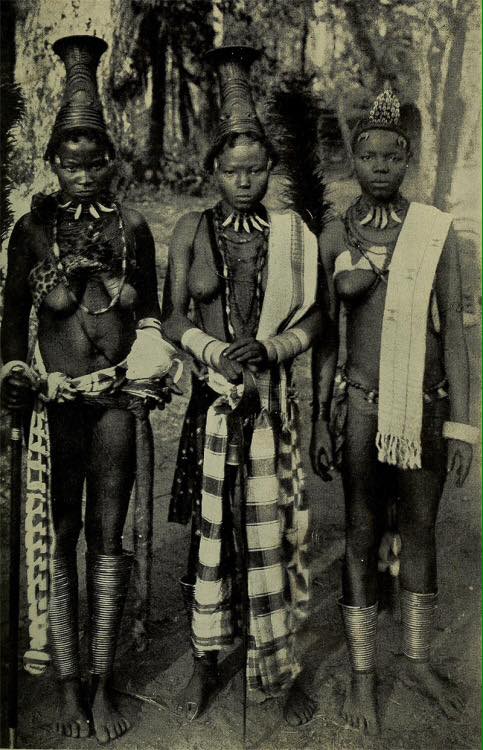
This is a picture of three Igbo women. Look at one of them holding the Akwa Ocha (that white patterned cloth worn during occasion in igboland)

In the olden days, it was owned by titled and prestigious men and women. My father had one.

Akwa Ocha is originally made at Akwaete. Akwaete is in Abia State. Three Igbo women and details of their attire including nja anklets and odu ivory bangles, akwa ocha (‘white fabric’) cloth, and a plaid-like cloth known today as George all made primarily in the Igbo speaking town known as Akwaete.

The above Photo is taken by missionary G. T. Basden in the early 20th century in an Igbo speaking area now known as Anambra State, Nigeria. The three women were likely engaged [and well off]. Those who are trying to re wrote history by saying Akwa Ocha is an exclusive preserve of certain people which makes them unique are liars from the pit of hell.

Part of our problem is lack of exposure. Not exposure on salad and chicken or how many oyibo you interact with but exposure on the things about your community. If you try and study your people, nobody can come and confuse you about your odinani.

I have just been blocked by a liar who was on his wall telling people that Akwa Ocha is the exclusive preserve of the Aniomas. This is another attempt to make it look like Anioma is different. Please go tell your lies to novices and those who do not understand their odinani and omenani. Ndi mmuo!!

Photo credit Nigerian Nostalgia Project

Monday, 21 April 2014

It’s civil war — Gowon

LAGOS—General Yakubu Gowon, who led Nigeria through a 30-month civil war, yesterday, lamented that the country had fallen into full scale civil war with the spate of crises in the northeast.
His assertion was corroborated by the Non-Academic Staff Union of Educational and Associated Institutions, NASU.
The assertions came as the governor of Borno State, Alhaji Kashim Shetima lamented that the last seven days have been the worst in his life following the abduction of 129 girls from a secondary school in the state. He disclosed that seven more girls had escaped from the hideout of the Boko Haram insurgents bringing the number of those remaining in captivity of the Islamic insurgents to 77.
Meanwhile, despite Saturday’s formal lapse of the state of emergency in the troubled Northeast, the military remained fully deployed in the three states with strict restriction on the movement of persons in the states.
However, telephone communications which were once curtailed after the proclamation of emergency rule by President Goodluck Jonathan last April have noticeably improved.
Nevertheless, opinion on the sustenance of the state of emergency remained mixed among stakeholders from within and outside the troubled states. While some called for the full implementation of emergency rule with the suspension of the elected political institutions, other stakeholders differed. All parties were nevertheless agreed that the soldiers deployed to the region should remain.
The president has not given notice of his inclination towards renewing or suspending the state of emergency. A security meeting between the president and the nation’s governors is expected to hold on Wednesday following which a formal announcement on the issue would be clarified.
The state of emergency was first proclaimed by President Jonathan in April 2013 and renewed after six months last November.
Gowon, who spoke exclusively to Vanguard on the sideline of events marking the 75th birthday of former Secretary to the Government of the Federation, Chief Ufot Ekaette, said it was imperative for the government to firmly deal with the rising wave of terrorism in the country so as to keep the country one.
The former head of state pointed out that what was going on in Nigeria was close to the challenges the 30-month civil war posed to his administration.
He said that it was necessary for all Nigerians to team up with the government to ensure that the forces opposed to the continued unity and progress of the country were roundly defeated.
Describing the insurgents as enemies of a united Nigeria, Gowon enjoined Nigerians to support the federal government with necessary prayers to God to end the cycle of violence being unleashed on the nation by the insurgents.

It’s civil war — Gowon

Gowon said: “What we are witnessing today is not too different from what happened during my administration as head of state and we moved ahead to checkmate the insurgency.
“We need to pray and work with the government to ensure that this ugly cycle of violence comes to an end so that the unity of Nigeria is not threatened. It is therefore imperative for the government to take appropriate decisions to deal with the spate of violence sweeping through the country so that this country can remain as one united entity,” he admonished.
While speaking at the birthday celebration, Gowon had said that he stood his ground to ensure that Nigeria remained as one during the civil war because he believed in the unity of the nation.
He pointed out that although he was not the one who coined “Go Ahead With One Nigeria, GOWON”, the coinage significantly inspired him to resist all attempts by certain elements to divide the country.
The former head of state therefore appealed to Nigerian leaders at all levels to ensure that they render quality service to their people and also resist the temptation to stay in office beyond the stipulated terms in the constitution.
Gowon, who poured encomiums on Chief Ekaette, who had served him as Private Secretary between 1968 and 1975, said the former SGF was an embodiment of loyalty, hard work and transparency, who should be emulated by all well meaning Nigerians.
NASU in a statement recalled the April 14, 2014 bombing at Nyanya Motor Park, Abuja, which claimed over 100 lives with over 250 others injured, and the abduction of several female students from a Government Girls Secondary School, GGSS, in Chibok, Bornu State, 24 hours after the Nyanya bombing.
Speaking through its General Secretary, Peters Adeyemi, NASU, argued that it was unbelievable that one week after, the whereabouts and safety of some of the abducted students had remained unknown till today, calling on the Federal Government especially, the military to live up to its responsibilities of protecting the nation both internally and externally.

My worst days ever — Shetima

Borno State Governor, Kashim Shettima has described the last one week as his most troubling moment since he took over the mantle of affairs in May, 2011.
The statement came as seven more girls escaped from captivity, bringing the total number of those who have escaped to 52 leaving 77 still in captivity.
Shettima’s expression of feelings was contained in his Easter message released by his spokesman, Isa Gusau and followed the abduction of 129 school girls in the early hours of last Tuesday at Government Girls Secondary School in Chibok, Borno State.
The Governor said though he had witnessed very dark days of insurgency inherited by his administration, none of the attacks had been more troubling for him as the abduction of the school girls.
“I am also very much aware that the girls abducted consist of not just those with origins traced to Chibok but also from other parts of the state and the country which is typical of a good secondary school that should unite Nigerians. I am also aware that the abducted students include both Christians and Muslim faithful.
“I am made to understand that the Ameera (spiritual head) of the Muslim Students Society in the school is among those abducted and yet to be freed. She was abducted alongside her Christian and Muslim colleagues without the insurgents worried about the religion any of the students practice. We must therefore remain united in our shared grief to pray vehemently for our girls as well as the patriotic security agencies and civilian volunteers currently in relentless search and rescue efforts.
“Between last night and this evening, seven more girls escaped from captivity, bringing to 52 the number of those with us out of 129 students that were at the hostel on the day of that attack. This means 77 students are yet to be found.”
CAN declares fasting, prayers, appeal for their release
Meanwhile, the Christians Association of Nigeria (CAN) in Borno State, yesterday, called on all Christians in the state and Nigeria to begin fasting and prayers for the release of all the secondary school girls kidnapped by insurgents in Chibok.
State chairman of the association, Rev. Titus Pona at a press briefing in Maiduguri yesterday equally appealed to members of the Boko Haram to release the school girls.
“We are calling on all Christians in Borno state, Nigeria and the world to fast and pray for the release of the girls.
He also called on the insurgents to lay down their arms and channel their grievances through dialogue with the federal and state governments.

Tuesday, 18 March 2014

Biafra , Nigeria --- The current state...

Written by Cebiloan Hyacint on the article: (Oil was a major issue in the Nigerian civil war forty years ago.) --- Comments by Restore Biafra.

Nigeria is a country that was created artificially by British colonialism. It has a complex ethnic mixture of groups, with a division between the North, inhabited by Muslim Fulani-Hausas with a rigid feudal system, and the South where a number of different ethnic groups co-existed loosely, the largest of these groups being the Christian Igbos and Yorubas. The trick of British colonialism was the divide and rule system. They knew the nature of Nigeria; that it is a country that doesn’t have the same climate, not the same religion, not the same mentality, not the same food, not the same dress, not the same dialect, and not the same culture. They used their military might to force Nigeria to be one by the amalgamation of the southern and northern protectorates of Nigeria (Jan. 1914). They gave the Fulani emirs political prominence at the expense of the Southern population and left a time bomb with the fuse burning.

Prior to independence, and afterwards, many threats of a Northern secession were made by the Northern politicians because they did not want to be part of Nigeria. But in realty these Northern political kangaroos called leaders did not want to lose the benefit of Southern oil and industries. Nigeria was supposed to get its independence before the Gold Coast (now Ghana) did in 1957 but, because Northerners were not prepared to be part of the new country, Nigeria lost many years in debate and compromise until the North agreed to be part of it. It was only in 1960 that independence came.

But the new Nigerian constitutional framework did not resolve everything, it being clear that Nigeria was sitting on a time bomb that would explode and cause real dangerous harm to all Nigerians.

The constitution did not change the relative cultural backwardness of the North compared to the South. What the Northern leaders wanted was a guarantee that they would retain their dominant political position after independence. If not, they would pull out and form an “Arewa Republic” for the interest of the Fulani-Hausa. British imperialists thought that the North were fools to be used, and stole the resources from the South. But, the North got their way in political domination in Nigeria.

Military rule

In 1966, a group of young officers assassinated the Northern leader Bello, the federal Prime Minister Tafawa Balewa and the Western leader Akintola who had become discredited in the eyes of the population. The coup leader, Major Kaduna Chukwuma Nzeogwu (now dead) broadcast the following reasons for the coup on radio:

“Our enemies are the political profiteers, swindlers, men in high and low places that seek bribes and demand ten percent, those that seek to keep the country permanently divided so that they can remain in office as Ministers and VIP’s of waste, the tribalists, the nepotists, those that make the country look big for nothing before international circles”.

In the North, jubilant masses ransacked the governor’s palace and cheered the coup leader, despite his Igbo origin.

The coup did not succeed. In Lagos, General Thomas Umunnakwe Aguiyi Ironsi had restored peace and order in the name of the old government with British backing. He placed himself as the first army general at the head of the federation and declared Nigeria under military rule.

Despite opposition from Northern politicians, General Ironsi announced his “Unification Decree” which although it changed little but names – regions became provinces, the federation became a Republic – caused a series of the most violent massacres of Southerners (the Igbos) yet seen in the North. “Armed thugs moved across the space between the city walls of Kano and the Sabon Garis where the Easterners (the Igbos) lived, broke into the ghetto and started burning, raping, looting and killing as many men, women and children from the East as the could lay their hands on”. It is without doubt that these massacres were deliberately planned by Northern politicians using their own armed gangs to whip up local feelings against the Igbos and other Southerners.

General Ironsi then went on a tour to Ibadan, Western region, to promote the “ One Nigeria” idea. While he was on this tour another coup was staged, by Northern army officers. General Ironsi and two of his commanding officers were stripped, beaten, tortured and then shot. With taking over command, the coup leader, led by a young British trained officer, General Gowon, issued instructions for Igbos in the army –many of them formed the majority of the technical corps – to be rounded up and imprisoned. And Gowon declared himself the supreme commander of the Nigerian armed forces. During September and October 1966, three months after Gowon’s takeover a large scale massacre of Southerners (the Igbos) was reported again from the Northern region.

The British High Commission in Lagos after meeting with the coup leaders came out in their full support –including their demand for recognition of the dominance of the North in any political process. All the regions except the South Eastern region – where the former governor, colonel Chukwuemeka Odumegwu Ojukwu, remained in command with his troops and refused to recognize the new dictatorship. (This) Ojukwu; son of a millionaire who had been knighted by the British, had been educated in Oxford Universty and Sandhurst college, saw the atrocities of Gowon and decided to lead the South-East to secession and war (secession not war).

Gowon thought that British imperialist liked him and that was why they would support him to fight a war against Ojukwu. But he failed to understand that Britain and America were only interested in stealing Nigerian oil (say Biafra oil).

The Biafra War

(The Biafra war? No, the correct subtitle should read The Biafra Genocide. America invaded Iraq, was that America-Iraq war? The same way, Nigeria invaded Biafra)
On 30 May 1967, Colonel Ojukwu proclaimed the independent Republic of Biafra. Biafra fought a war against Britain, (USSR, Egyptian pilot), the United States of America, the Nigerian federal army and the River State militia. The actual fighting lasted for 24 months and took the form of an initial conquest of towns and a whole region to the west of Biafra by the Biafran Army and then the slow re-conquest of this region and Biafra itself, town by town, with the Nigerian Federal Army with its imperialist backers pushing the Biafran troops further back.

What the Nigeria and Biafra civil war did achieve was hatred, tribalism, nepotism, marginalization, ethnic inquisition, killings of 2 million innocent Nigerians (more than 3.5 million Biafrans) who did not know anything about politics nor the oil in their region by Gowon and his capitalists backers, i.e. Britain and US. It also resulted in the reinforcement of the Gowon regime as the military dictatorship was to remain in power for a further six years before being kicked out of power by another brutal military dictator Major General Murtala Mohammed in 1976.

Rivalries for Oil

The BBC journalist Frederick Forsyth, who reported from Biafra during the war, later highlighted a major factor precipitating the war:

“It has been postulated that if the Biafrans had had their way as a republic of semi-desert and was allowed to separate from Nigeria, there would have cries of ‘Good Riddance’ in their ears. One foreign businessman said that ‘it’s an oil war’ and felt obliged to say no more.”

Biafra was not a semi-desert, beneath it lies an ocean of oil. Approximately one tenth of this field lies in neighbouring Cameroon, three tenths in Nigeria. The remaining six tenths lies under Biafra.

Gowon and his ruling bandits and Ojukwu’s Eastern interest group had attempted to make an agreement over the terms of their relationship with the British and US oil companies in New York in June 1967. Ojukwu claimed the right to the royalties paid in Lagos by Shell/BP. Up until June 1967, £7 million due to Nigeria in oil royalties had not yet been paid. It was discussed that Biafra should receive 57.7 percent of the royalties and the rest be put aside until there was a political settlement. Gowon vehemently refused to pay and threatened to extend the anti-Biafra blockade to the Bonny Island oil terminal. Without respecting the agreement, Gowon’s troops launched their attack and captured the terminal at Port Bonny.

As soon as the Nigerian army took the oil terminal, the British and US oil companies arrived behind them building new oil installations as fast as they could while war was still raging a few kilometres away.

The Gowon regime represented by proxy the interests of Britain, the US and Muslim countries including Egypt whose pilots flew the Ilyushin jets provided by the USSR. The important imperialist interests at work were those of the oil companies owned by the British, Americans and French and backed by their respective governments in the way they lined up for and against Biafra.

Shell/BP was the biggest exploiter of Nigerian oil. This Anglo-Dutch consortium held the major concessions for oil in both the Biafran and Niger delta region where oil had more recently begun to be pumped. When Biafra was blockaded all oil ceased to flow – because the oil from outside of Biafra, from the Niger Delta’ was conveyed to Port Harcourt, now in Biafra, via a large pipeline. The US companies were also exploiting Nigerian oil but their interests were mainly in the Niger Delta region.

As to France, since all oil concessions in the Biafran region were not yet taken by super imperialists, they had been planning to expand their own concession already operating in Biafra in the name of the state-owned company ELF. Because of that they were in direct rivalry with Shell/BP and hope to gain something at their expense.

The President of France, General Charles De Gaulle kept his options open. Though he never formally recognized Biafra, he did support Biafra’s “right to self-determination” and gave aid through France’s colonized states like Ivory Coast, Cameroon and Gabon. Biafra also got support from South Africa, and Israel.

In 1970, after the genocide, a series of peace talks were held and a settlement was reached and Gowon made his famous speech that there were no victors, no vanquished in this war. Of course, this was true. Both sides had suffered severe losses and part of the country had been devastated. But there was one victor not only in Biafraland but, also in the whole world. Imperialism had established a number of new oil terminals and ensured the stability of its oil profits thanks to Gowon.

The “unity” of Nigeria in reality disappeared because of the mistrust built up during the war and the atrocities perpetrated against Biafrans by Gowon and his imperialist backers.

Every war fought in the world is at the advantage of capitalism. The Nigerian-Biafran war, Rwandan genocide, Liberia war, Sierra Leone war, Democratic Republic of Congo war, Ivory Coast war, Uganda war, Eritrea-Ethiopia war, Darfur conflict, Angola war, Iraqi war, Palestinian-Israeli war, Afghanistan war, India-Pakistan war, Somali war, Zimbabwe conflict, Senegal-Cassamace war, Guinea Bissau war, Chechnya-Russia war. All wars to the advantage of capitalism. Beware and be warned.

Do not say that you did not know or hear about socialism and what we do. The choice is yours. Enough is enough - we must work together and join hands and cast capitalism and imperialism to burn in the abyss of everlasting fire.

Sunday, 9 February 2014

Who Cares About Biafra Anyway?

News Source: Published February 25, 1969
(This is another story about Biafra. We all know about Biafra--it's where a million people have starved to death in the past six months. One million people. Think about that for a minute. There are almost five thousand Harvard undergraduates. If each one of us died two hundred times, that would be almost a million deaths. Almost, but not quite. Yes, we all know about Biafra.)

THE UNITED STATES government never meaningfully recognized that the Biafran situation existed until this month. The government had not even breathed the possibility of official U.S. recognition of Biafra as a nation, predominantly as a result of the archaic "one-Nigeria" policy which America inherited from Britain and has guided State Department attitudes toward West Africa for years.

Earlier this month the State Department sent a six-man fact-finding mission to examine the needs of both Nigeria and Biafra and to make recommendations to the U.S. government about the necessary forms and amount of possible aid. Senator Charles E. Goodell (R.-N.Y.), accompanied by his administrative assistant--Charles W. Dunn--was in charge of the mission's diplomatic aspects.

Four experts on African problems, led by Jean Mayer, professor of Nutrition at the School of Public Health, also treked to Biafra. They made detailed studies of the supplies and health of both sides of the conflict, but they concentrated on Biafra because of the huge gaps in America's knowledge of the situation there due to the lack of diplomatic links with that area. Mayer said "At least this (the mission) means the State Department realizes that Biafra will probably survive for at least the immediate future."

The Mission has prepared a 36-page report, edited by Mayer, which calls for an immediate ceasefire as the only way to provide adequate food and medical supplies, a halt of the atrocities being committed against Biafran civilians, and a huge increase in the amount of relief supplies. The report blasts the United States and the United Nations, except UNICEF, for their failure to aid the Biafrans. In a foreward to the report, Sen. Goodell states "It was our purpose to fill America's factual void" on Biafra. "May these findings bestir the world's leaders to prevent an indirect form of genocide."

Right now, with the report still at the printer's, it's a moot point whether or not America will carry out the report's recommendations. Chances are good when you consider that Goodell is a leading Republican and that Nixon seemed to smile at the Mission's purposes. On the debit side is the influence of Great Britain, who, along with the Russians, are arming the Nigerians. No matter what the State Department does with the report, or doesn't do, if this report of starvation doesn't stir well-fed America, perhaps, as E. E. Cummings once suggested, we'd better "Burry the Statue of Liberty because it begins to stink like hell."

BEFORE the civil war, Biafra differed from most developing nations because it had a good supply of food and water, and sound public health policies with many physicians, nurses, hospitals, and clinics. Following the slaughter of 40,000 Ibos in 1966, about two million Ibos and other minority groups left their positions throughout Nigeria and fled to Biafra. Additional refugees continue to pour into Biafra to avoid capture by the Nigerian troops who have gained a reputation for slaughtering whole villages.

While Biafra originally encompassed 29,000 square miles, present boundaries now enclose only about one-fourth of that area. This remaining territory is totally landlocked and does not contain the former Biafra's most fertile land. The Mission asserts that somewhere between eight and nine million Biafrans live in this area, although many previous estimates have been as low as four million.

THE PREVAILING shortage of foods is likely to reach famine proportions during the next few months. Before the war Biafra was not only self-sufficient in food production, but the area exported some items to the rest of Nigeria. Proteins, however, have always been a problem, with 80 per cent coming from northern Nigeria and Europe. The land, sea, and air blockade imposed on this area by the Nigerians early in 1967, even before Biafra declared its independence, cut off normal food sources of proteins.

Diversion of able-bodied Biafrans to defense has weakened further Biafra's agricultural output. Dislocation of markets and transportation snafus have spurred inflation to astronomical heights.

To remedy the situation as best as possible, Biafra has established an Emergency Food Production Program, aimed at the total mobilization of all available resources for increased food production. To expand production, a special unit of males between the ages of 12 and 35 who are not in military service receive farming training. Their goal is to clear 100 acres for agricultural use in each village.

The smuggling of food from Nige- rian-held territory into Biafra has been discouraged severely by both armies. Only a trickle of food reaches Biafra from this route anyway, but some of the smuggled food was found to contain poisonous ingredients. Deliberate poisoning of food supplies was suspected first in 1967 when several deaths were thought to be caused by toxic foods. Of 1487 samples of salt--the principal item being smuggled in--which were tested by Biafrans during the last part of 1968, 20 samples contained toxic quantities of arsenic and 50 contained cyanide.

Mayer said that several samples collected by the Mission which could not have been "fixed" by the Biafrans were submitted to the Food and Drug Administration upon the group's return. "The samples contained arsenic, the Administration confirmed the Biafran reports." Mayer said.

Right now there are outright starvation conditions among the refugees. Acute protein deficiency is widespread among all Biafrans. The Mission's members reports that, they never saw one child in satisfactory nutritional condition in any of the camps they visited. Mass feedings must be made under the most difficult of situations: distribution centers and refugee camps are bombed and strafed if any large numbers of people are visible in the daylight. Red Cross insignias are singled out for special attention by Nigerian bombers. Mayer saw one European engaged in working on the Biafran side of the war front carry 117 dying children in his truck to a hospital in a single night.

"WHILE visiting several hospitals," Mayer reports, "we saw children on the floor between the beds, along the outside corridors, and often two or ore to each bed. There was not one well nourished child among the 80 seen in one 20-bed ward. Particularly disturbing to witness was one small girl with the arm in a cast, the victim of a bombing attack, who refused to come out from beneath her bed, afraid of the bombs. Children as young as 16 months of age were observed running into bunkers when they heard the first warning shots before the bombs fall."

Severe malnutrition underlies all other Biafrian diseases. Severe anemia is widespread among children and pregnant women. Infectious diseases, including meales especially, hit hardest at the very young and the elderly. Tuberculosis, malaria, and dysentery also are prevalent. Hospitals are not only consistently bombed, but airplanes come in low and strafe the fleeing patients and staff.

Before the war, Biafrans, particularly the Ibos, had stood out among inhabitants of West Africa in literacy, youths admitted to universities, and general respect for learning. Many observers believe that the Ibos' high level of education, coupled with the extremely high number of managerial and professional posts they occupied, generated intense envy among the Nigerians. Now there is next to no formal education going on among the Biafrans. The University has closed completely. Only here and there through the area a number of primary schools hold classes in the forest so that the leaves will hide the children from enemy aircraft.

The Biafrian Mission Recommends:

1) The fundamental action needed to alleviate suffering in the Nigerian civil war is an immediate ceasefire, for this is the only way that food and medical relief can be adequately provided. 2) The atrocities being inflicted upon Biafrian civilians must be halted. 3) The Biafrans need a greatly expanded tonnage of relief supplies, especially food. To accomplish this,, in addition to the relief plane flights, a sea or land corridor must be opened up under international control. Only this method would be able to furnish Biafrans with the six to eight thousand tons of relief supplies needed each week.

The Mission also made suggestions in the following specific areas:

* Health -- The already existing campaign for vaccination against measles and smallpox should be widened so as to include more than 50 per cent of the population and health education plans should be instituted to spread information into the more remote areas.

* Agriculture -- Relief supplies -- insecticides, seeds, baby chicks, tools, etc.--should be made available to the Land Army, Biafra's farmers' corps.

* Education -- Bombing of schools should be stopped so that children can use school buildings, as well as to avert the carrying out of intellectual genocide against the next generation.

* Transportation -- In order to insure the adequate distribution of relief supplies, tires and spare parts for cars and trucks should be supplied when required along with lubricants, gas, and vehicle repair tools.

The Mission expressed deep dismay over the United States' and the United Nations'--except UNICEF--low level of involvement in the Biafrian crisis. The Mission proposes, in effect, four steps for the U.S. to take: 1) to play a more active role as a mediator in the negotiations leading to a cease fire and expanded relief. 2) To station in Biafra some medical and nutritional personnel to report possible solutions to the President. 3) To send a relief coordinator to Biafra who would work with voluntary agencies and with the Biafran physicians. 4) For this and similar situations which could arise in the future, the President should designate a Relief Advisor to work in a voluntary capacity as his consultant on problems of international relief.

Mayer would not comment on whether the report would hasten U.S. recognition of Biafra. However, he did observe that "arriving at some sort of accommodation is made easier by the fact that about four African states have recognized Biafra and France has made gestures that have enhanced Biafra's dignity as a nation." He added that the Biafrians' situation was similar to the Isrealis. Both countries are heavily intellectual groups set upon by less educated peoples who have superior numbers. "To borrow a phrase, the highly-civilized have been bombed back into living in caves," Mayer added. He pointed to the Biafrans' skill in setting up petroleum distilleries from scratch. "They are very inventive, and experiment constantly to find out how best to use their resources."

Mayer blasted the British -- who, along with the Russians, arm Nigeria--for their "clumsy, heavy-handed role in this conflict." He said he hoped President Nixon would convince Harold Wilson that Britain's policies in West Africa should be drastically changed.

THE ONE aspect of the situation which impressed the Mission most was the Biafrans' good spirits in the5Photo courtesy of the Boston Globe

Saturday, 1 February 2014

What is Biafra?

Was Biafra Ojukwu's formulation?

NO, Biafra (Biafara) has been in existence before the creation (without consensus) of Nigeria. Please check the 1662 map below.

The word "Biafara" stands for "Come and join". It is mostly occupied by the present day "South-Eastern" Nigeria, "South South" and some parts of southern Cameroon. Reading a closer meaning into the name explains the dominant behavior or character of the Biafran people explaining why they got such name naturally.

A true Biafran person is known for his hospitality and forgiveness. Some people say they are "ala wu otu" meaning "land is the same" kind of people. This goes deeper to explain why the Biafrans still went back to the Northern part of Nigeria after the civil war despite the fact they are being killed on daily basis for who they are and how successfully and religious they are. Let us not forget that the mass execution of the Biafrans in that part of the country was what led to the civil war in the first place. The same trend is repeating itself unreported or rather inappropriately reported. The media in Nigeria is a mess and controlled by politicians and the government.
Wave Biafra Flag
Powered by Blogger.


© 2014 Biafra Restoration Movement Commentary . All rights resevered. Designed by Nwa Chineke